.jpg)
Dental Solutions in Canton, OH
Implant-Supported Dentures in Canton: Teeth That Stay Where You Put Them
If your dentures shift mid-sentence, make certain foods off-limits, or just never feel quite right, you're not alone. Dr. Linser and the team at Legacy Oak Family Dental hear this constantly. Implant-supported dentures are a different approach: small titanium posts are placed into your jawbone and your denture attaches directly to them. No adhesives, no clicking, no adjusting with your tongue. Your teeth stay put, and chewing feels like chewing again.
Whether you qualify mostly comes down to how much bone you have in your jaw. If it's on the thinner side, that's usually something we can work with before placing the implants. The full process takes several months, and all of it happens right here in Canton.
Call us at (330) 494-3133 and we'll take a look together.
Quick Takeaways
- Two styles to choose from. Snap-on dentures come out for cleaning; fixed ones stay in and get brushed in place. Both are great options that feel different day to day.
- Thin bone doesn't rule you out. A 3D scan shows exactly what's there, and bone grafting can often build up the foundation before implants go in.
- Plan in months, not weeks. Implants need time to fuse with your jawbone. That healing phase is what makes them so stable, and it's worth the wait.
- You won't go without teeth while you heal. We'll make sure you have something to wear in the meantime.
How Implant-Supported Dentures Work
1. Consultation and Imaging
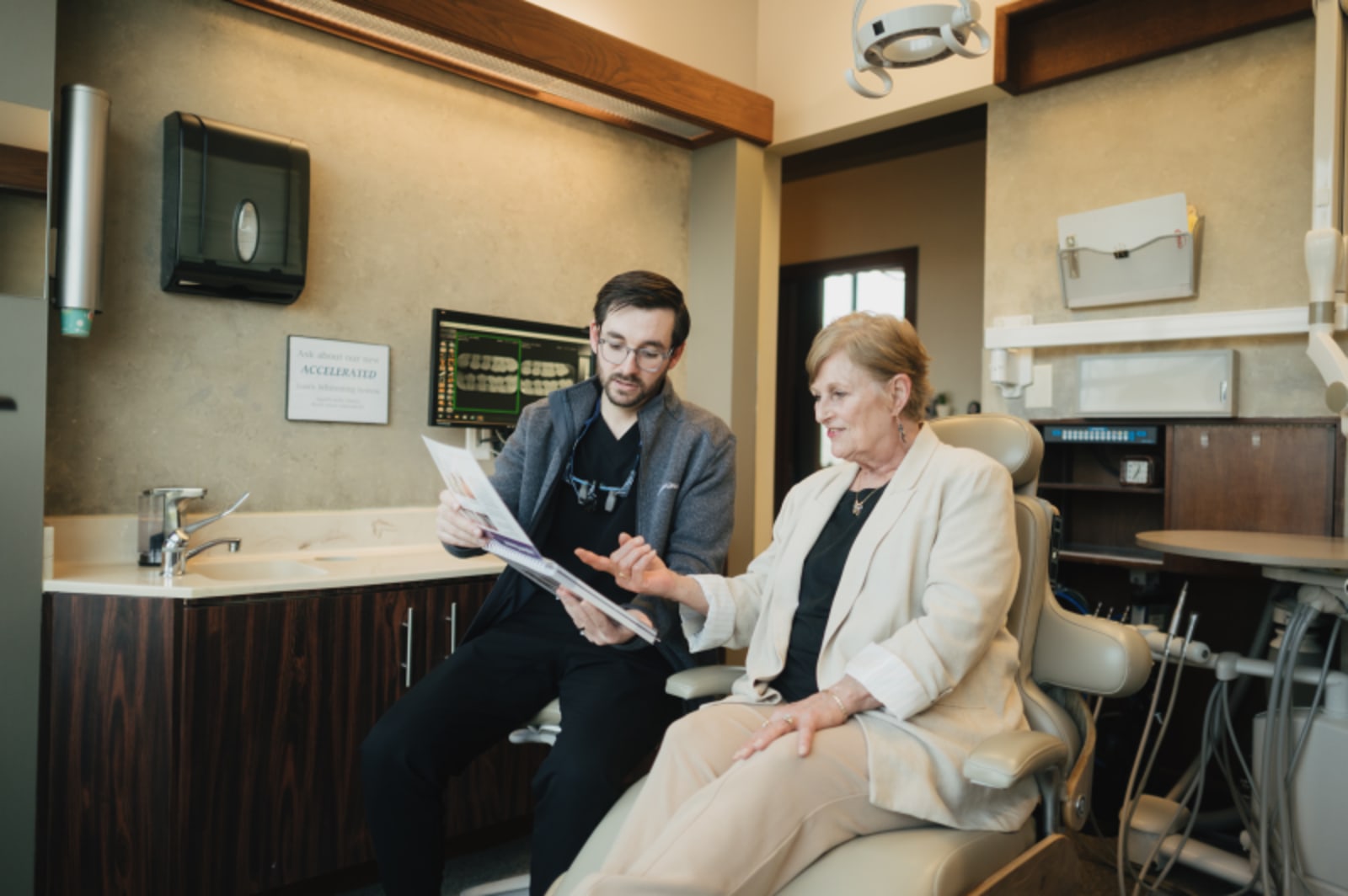
We do an exam, take a CBCT scan (a 3D X-ray of your jaw), and use an intraoral camera so you can see what we're seeing. You leave with a specific plan for your case.
2. Any Prep Work
Some patients need remaining teeth removed or bone grafting done first. If that applies to you, it's part of the plan from day one, not a surprise later.
3. Implant Placement
Small titanium posts are placed into your jawbone while you're numb. Most patients find it more manageable than they expected. Sedation is available if you'd feel more comfortable with it.
4. Healing and Integration
Your bone gradually grows around the implant over a few months, locking it in place like a natural root. Nothing permanent gets attached until that bond is solid.
5. Final Denture and Fit
Once you've healed, we scan your bite digitally and attach your denture. We fine-tune the fit until it feels right, and follow-up visits are already built into the plan.
What Changes When Your Teeth Stop Moving
- You eat like yourself again. Crunchy, chewy, tough textures come back onto the menu. Steak included.
- Your speech settles. When nothing's shifting around, there's nothing to compensate for mid-sentence.
- No more adhesive routine. Nothing to reapply at lunch, nothing to pick up on the way home. Just teeth that do what they're supposed to.
- Your jawbone stays healthier, longer. Implants transfer chewing force down into the bone the same way natural tooth roots do, which helps keep that bone from shrinking away over time.
- Chewing actually feels comfortable. Traditional dentures rest on your gums, which can get sore under pressure. Implants anchor into bone instead, so your gums aren't carrying the load anymore.
- They look like your teeth. Dr. Linser and our Canton team match the shape and shade to your face. Not a generic smile, yours.
Who This Works Well For
More people qualify than they expect to. Good candidates usually share a few things in common:
- Missing most or all of their teeth on the top, bottom, or both
- Wearing dentures that slip, click, or limit what they feel comfortable eating
- Enough jawbone to support implants, or bone that grafting can build up first. Some loss after years without teeth is normal and doesn't automatically rule you out.
- Overall health stable enough for a routine surgical procedure
A couple of things we'd want to address first: active gum disease gets treated before any implant work, and if you smoke, we'll have an honest conversation about what that means for your healing.
Getting Ready and Caring for Them After
Before Treatment
Bring your full medication list and any medications you take to your consultation, especially blood thinners or anything that affects healing. If gum treatment is needed first, we build that into your timeline. If you're having sedation, you'll need someone to drive you home. Stock up on soft foods before surgery day so you're set from the start.
The First Couple of Weeks
Some swelling and tenderness the first few days is completely normal. Most patients manage just fine with over-the-counter pain relief, ice, and soft foods. Keep the area clean as we show you, and if anything feels off, call us. We'd rather hear from you early.
Long-Term Care
Day-to-day care is straightforward. Brush your denture and the gum tissue around the implants daily. Removable styles come out for cleaning; fixed ones get brushed in place with the right tools, and we'll show you exactly how. Regular checkups still matter too. Implants can't get cavities, but the gums and bone around them need a little ongoing attention to stay healthy.
Understanding the Cost of Implant-Supported Dentures
The price varies from person to person because every case is different. What moves the number is how many implants you need, whether you choose a snap-on or fixed style, any prep work like extractions or bone grafting, and the materials used in your final denture. We walk through an itemized breakdown with you at your consultation, before you agree to anything.
Legacy Oak is a fee-for-service practice, meaning our recommendations are based on what's right for your mouth, not what an insurance plan will or won't cover. If cost is the thing holding you back, just say so. We'd rather have that conversation early than have you walk away without knowing what's actually possible.
Comparing Your Tooth Replacement Options
Not every patient needs implants, and not every patient is ready for them. Here's how the three main options stack up so you can walk into your first appointment with a clearer picture.
- Traditional dentures rest on your gums and stay in place through suction and fit. Lower upfront cost, no surgery, and genuinely the right call for some patients. The tradeoff is that fit changes over time as the bone underneath shifts.
- Implant-supported dentures anchor into the bone itself, so they stay stable and help preserve the jaw over time. They cost more and take longer, but the day-to-day difference is significant.
- All-On-Four is a full arch of fixed teeth supported by just four strategically angled implants. A strong option when bone is thinner in certain spots and a full removable denture isn't what you want.
We offer all three options here in Canton. Once we've seen your scan, the right path usually becomes pretty clear, and we'll walk you through it together.
Why Patients Around Canton Choose Us for Implant-Supported Dentures
Dr. Linser maps out your full treatment at the very first appointment, with the end result in mind from day one. The tools he works with make that planning precise: an intraoral camera so you can see exactly what he sees, CBCT imaging for a detailed 3D picture of your jaw, a digital scanner instead of goopy impression trays, and a soft tissue diode laser for the detailed gum work implant cases often need.
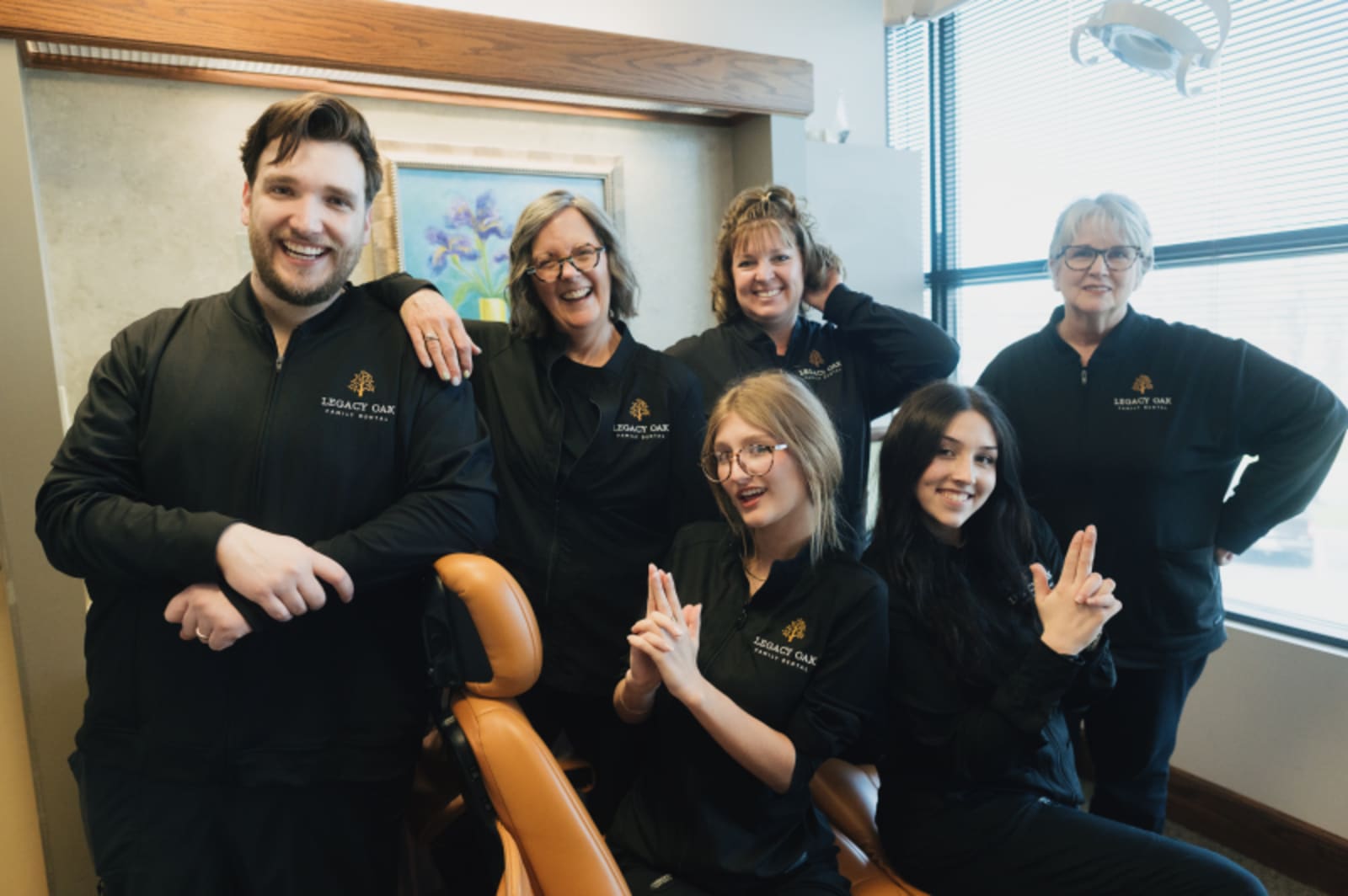
The atmosphere here is something patients notice right away. There's genuine laughter in this office because the team actually enjoys being here, and that matters when you're nervous. Dr. Linser grew up in Van Wert as the first in his family to go to college, and that shapes how he practices: he slows down, explains what's happening, and makes sure you leave with a clear picture, not more questions.
Frequently Asked Questions
Does Getting the Implants Hurt?
The procedure itself is painless. The area is numbed before we start, and sedation is available if you want to feel more relaxed throughout. Afterward, most patients manage any soreness with ice and over-the-counter pain relief for a few days.
Can I Take Them Out?
It depends on the style. Snap-on dentures click onto the implants and come out for cleaning. Fixed dentures stay in permanently and get brushed in place. We'll walk through both options so you can choose what fits your life best.
I've Worn Dentures for Years. Am I Too Late?
Most likely not. A 3D scan shows exactly how much bone is still there. Some bone loss after years of dentures is normal and doesn't automatically rule you out. If grafting is needed, it changes the timeline, not what's ultimately possible.
How Long Do Implant-Supported Dentures Last?
The implants themselves can last decades with regular checkups and good home care. The denture attached to them sees more daily wear and may need relining or replacement over time. Think of it like a car: the engine lasts a long time, but the tires need attention along the way.
Do I Need One Implant for Every Missing Tooth?
No. A small number of well-placed implants can support an entire arch of teeth. The exact number depends on your bone density, your bite, and whether you choose a removable or fixed style, something we determine together after reviewing your scan.
Let's Find Out What's Possible for You
One conversation and a quick scan is all it takes to know where things stand and what your options actually are. Dr. Linser will walk you through everything at your own pace, whether that's figuring out if implants are right for your situation or mapping out what the process looks like from start to finish.
Call us at (330) 494-3133. We're at 4774 Munson St NW, Suite 201 in Canton, and we'd love to meet you.